
🔥 5 Minutes of Leadership Fuel
✉️ This post is part of The 5-Minute Mentor — my weekly leadership newsletter. If you’d like to get it delivered straight to your inbox, click here to subscribe.
Welcome to The 5-Minute Mentor — your weekly dose of leadership inspiration, curated resources, and practical action. All in under 5 minutes.
Activating Your Genius in 5,4,3,2,1… 🤩
🫶 A Dose of Inspiration
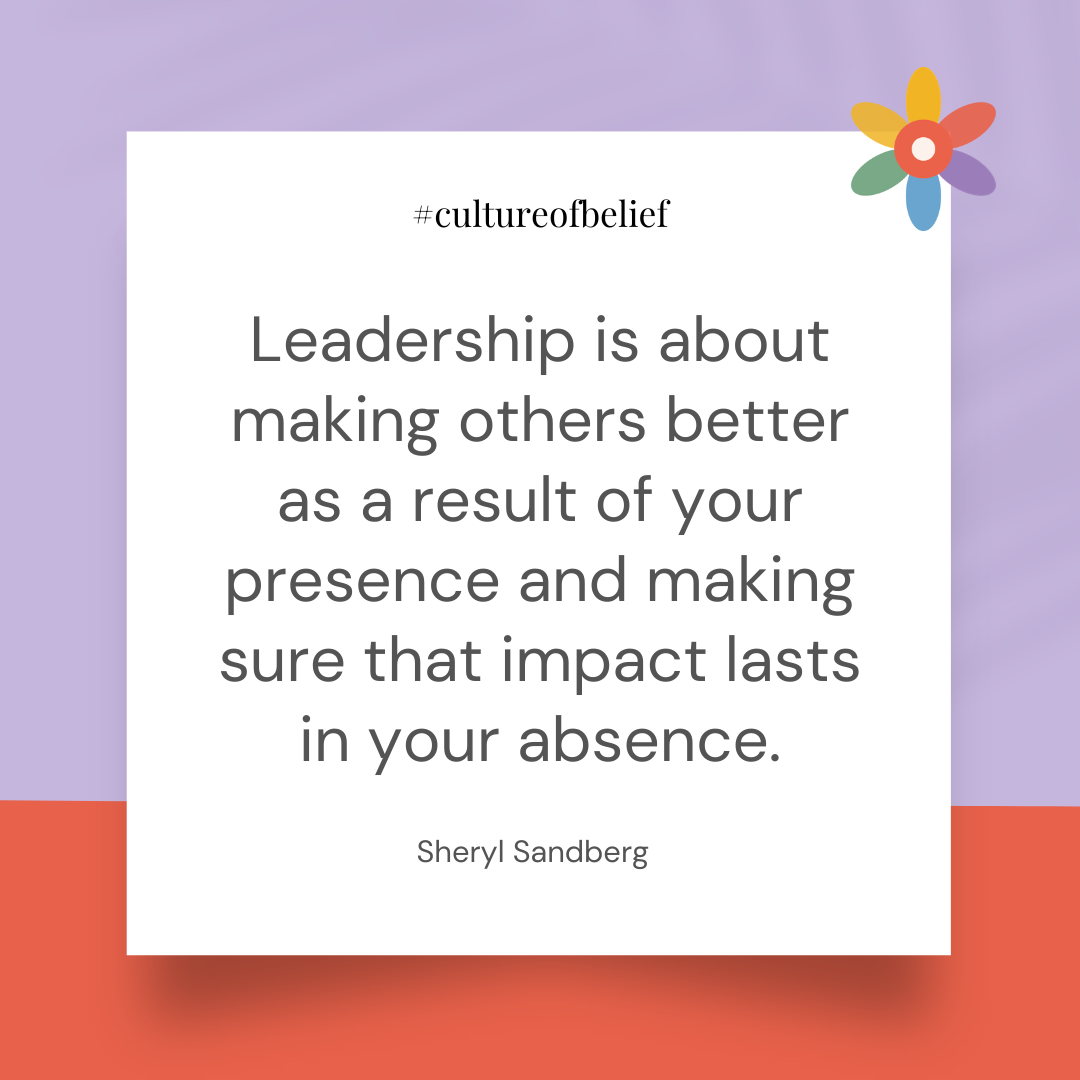
“Leadership is about making others better as a result of your presence and making sure that impact lasts in your absence.”
— Sheryl Sandberg

The best leaders make the room better while they’re in it, and leave people elevated long after they’ve gone. That kind of presence is built, not born.
📥 Download the quote graphic to use in your next staff email or meeting.
🤓 A Dose of Learning
The longer I do this work, the more convinced I am of one thing: leadership is people work. And being good with people isn’t a fixed trait. It’s a set of skills you can actually build. Hooray for that!
That’s the exact question Angela Duckworth and Stephen Dubner take on in an episode of No Stupid Questions (from the Freakonomics network): is emotional intelligence really so important? Duckworth’s answer is worth sitting with. Emotional intelligence is real; it’s been studied for decades, and Peter Salovey, who went on to become the president of Yale, helped create the first real measure of it. It reliably predicts how well people perform at work, and it’s closely tied to empathy… the very thing we hope for in the people on our teams.
And here’s what matters most for those of us in people-centered work: the research points to emotional intelligence counting most in the jobs that are all about people. Teaching. Caregiving. Leading. The more human the work, the more it matters.
Duckworth breaks emotional intelligence into four parts, not one:
- Perceive. Reading emotion accurately, in yourself and in the room. Catching the tone, the expression, the shift in energy.
- Use. Putting emotion to work for your thinking. Choosing the state that fits the moment.
- Understand. Knowing where feelings come from, and having the words for them. The difference between “I’m just off today” and “I’m disappointed, and here’s why.”
- Manage. Steadying your own emotions, and helping others steady theirs. Not shutting hard feelings down, but meeting them with intention.
The best news is what Duckworth says next: emotional intelligence is malleable. It’s an ability, not a fixed trait, which means it grows with practice. Yale’s Center for Emotional Intelligence built an entire curriculum around it, and Marc Brackett’s book, Permission to Feel, is a great resource. There’s even a bit of a self-fulfilling prophecy at work… the people who believe they can grow it are the ones who actually do.
And it starts with something quieter and easier than you’d think: noticing. Notice what you’re feeling. Notice what the people around you are feeling.
If you were with us back in edition 023 focused on Lencioni’s The Ideal Team Player, this will ring a bell. His third trait, “Smart,” is what he calls people-smarts… emotional intelligence, but simpler. Think of that edition as the characteristic, and this one as the anatomy underneath it.
Great teams aren’t built by finding people who have all of this figured out. They’re built by people willing to keep growing it, together. And when we do, we create the conditions where everyone’s genius can show up, be seen, and contribute to something meaningful.
🎧 Listen to the episode here: No Stupid Questions: Is Emotional Intelligence Really So Important?
🎯 A Dose of Action
Like any other skill, you grow your emotional intelligence in reps. You won’t master all four parts this week… or ever for that matter. But picking just one and practicing it a few times will have a positive effect that’s worth the investment.
🌀 Notice:
Start here, with the smallest practice that returns the most: this week, trade the autopilot “How are you?” for a real “How are you feeling?”… and answer it honestly for yourself first. That one swap is a rep in awareness, and it’s the on-ramp to everything below.
🌀🌀 Nurture:
Then choose a part to train:
- Perceive. Before you walk into a meeting, pause to read the room before you speak. What’s the energy already in there… and does your opening meet it, or steamroll it?
- Use. Ahead of one hard moment this week… a tough conversation, a big decision… name the state that would actually serve it, then choose it on purpose. Curious instead of guarded. Steady instead of rushed.
- Understand. When a feeling hits, get specific. Not “I’m stressed,” but “I’m frustrated because I wasn’t looped in.” The precise word points straight at the real need… and a named need is a solvable one.
- Manage. Build in the pause. One breath before you answer in the moment that usually gets the worst of you. And when someone hands you a big emotion, meet it with calm instead of hurrying it away.
🌀🌀🌀 Ripple:
Share this learning with your team. Encourage them to each pick one part they’d like to grow, and keep modeling your own. When a leader names it first, everyone else gets permission to grow it too.
One rep. One part. One week. That’s how the people around you start leaving your presence a little more elevated than they arrived. 🤩
You got this. Let’s lead with belief.
In your corner,
Melody
Founder, Culture of Belief
PS: Umm… yeah. Wanna say 2:30? 🦷😂

Send them this link to join The 5-Minute Mentor.